

What is a Dam? A dam is a hydraulic structure constructed across a river or stream to store water on its upstream side. It is an impervious or fairly impervious barrier built across a natural watercourse to form a reservoir. Dams are constructed for multiple purposes such as irrigation, water supply, flood control, hydropower generation, and recreation.
Advantages of Dams
Dams provide numerous social, economic, and environmental benefits. They contribute to improved public health, increased food production, protection from floods, renewable energy generation, and recreational opportunities. The major advantages of dams are discussed below.
-
Irrigation

- Water stored in reservoirs is widely used for irrigation. A steady water supply encourages cultivation of additional land, thereby increasing agricultural production and food security.
- Example: Burrinjuck Dam in Australia serves as the main headwater storage for the Murrumbidgee Irrigation Area.
-
Drinking Water Supply
- Reservoir water is treated and supplied for drinking, municipal, and industrial uses. Reliable water supply helps reduce water-borne diseases such as cholera and dysentery.
- Example: Warragamba Dam supplies water to over 3.7 million people in Sydney, Australia.
-
Hydroelectric Power Generation
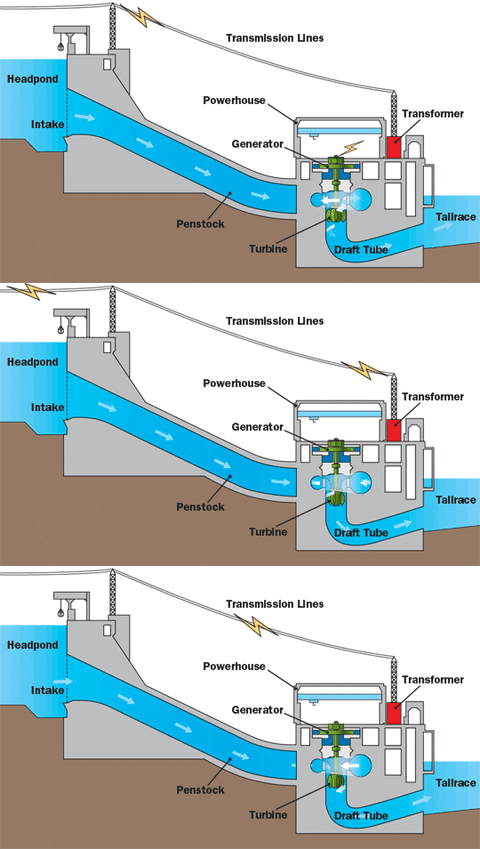
- Dams generate renewable electricity without the need for fossil fuels. Hydropower is non-consumptive and environmentally cleaner compared to thermal power plants. Once constructed, operational costs are relatively low.
- Example: Itaipu Dam on the Paraná River is one of the world’s largest hydroelectric power stations.
-
Flood Control
- During heavy rainfall, dams regulate downstream water flow, reducing flood damage to crops, property, and infrastructure.
- Example: The Tennessee Valley Authority (TVA) dams help control floods in the USA.
-
Mine Tailings Management
- Special tailing dams store toxic mining waste safely, preventing environmental contamination.
- Example: Mount Polley tailing dam in British Columbia, Canada.
-
Water Storage
- Reservoirs provide long-term water storage. They also support fish farming and aquaculture activities.
- Example: Corin Dam in Australia.
-
Navigation
- Dams and locks create stable waterways, facilitating inland river transportation.
- Example: Bonneville Dam in the USA.
-
Environmental Benefits
- Hydropower reduces greenhouse gas emissions compared to fossil fuels.
- Tailings dams protect land and water from mining waste contamination.
-
Debris Control
- Detention dams control sediment and debris flow, reducing damage in mountainous areas.
-
Recreation
- Reservoirs support boating, fishing, camping, and tourism.
- Example: Scrivener Dam in Canberra, Australia.
Disadvantages of Dams
Despite their benefits, dams also create social, environmental, and ecological challenges. Understanding these disadvantages is essential for sustainable planning.
- Submergence of Land: Large areas are flooded to create reservoirs. People must be relocated and compensated, which increases project cost and social disruption.
- Risk of Dam Failure: Failure may occur due to faulty design, poor maintenance, earthquakes, or extreme floods. Dam failure can cause catastrophic downstream damage.
- Water Quality Issues: Excess irrigation water may degrade due to fertilizers and pesticides, leading to groundwater contamination.
- Impact on Aquatic Ecosystems: Dams alter natural river flow, affecting fish migration and aquatic life cycles.
- Loss of Downstream Sediment: Reduced sediment flow can increase coastal erosion and decrease soil fertility downstream.
- Reduction in Biodiversity: Reservoirs replace flowing water habitats, reducing species diversity.
- Alteration of Natural Flow Regime: Natural seasonal flow patterns are disrupted, affecting downstream ecosystems.
Although dams provide essential benefits such as irrigation, hydropower, and flood control, they must be planned and managed carefully to minimize environmental and social impacts. Proper environmental assessment and sustainable policies are crucial for future dam construction projects.