

Demountable walls are a type of partition wall that can be easily installed, dismantled, and relocated without major structural alteration. This type of wall is commonly used in offices, commercial buildings, and institutional spaces to create flexible layouts. Demountable wall systems allow temporary or semi-permanent space division while maintaining structural integrity and aesthetics.
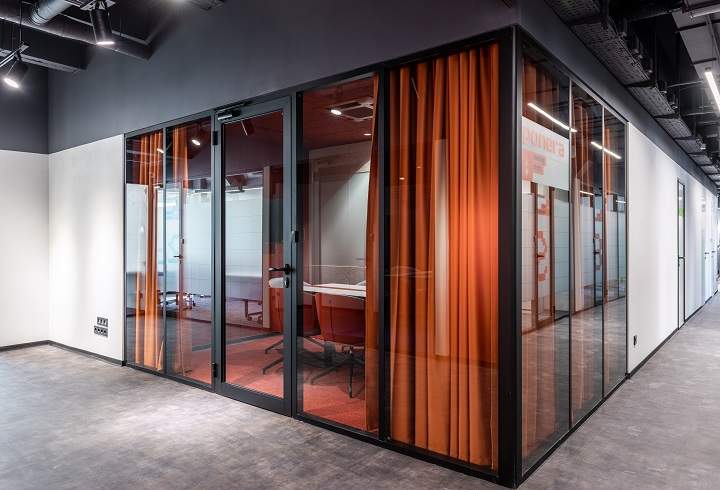
Features of Demountable Walls
The followings are the major features of demountable wall systems:
- Non-load-bearing partition systems
- Modular components for easy installation and removal
- Available in wood, glass, aluminum, and steel finishes
- Factory-manufactured panels for dimensional accuracy
- Integrated electrical and data cable management options
- Reusability and minimal material waste
- Sound insulation options available
The Benefits of Demountable Walls
Demountable partitions provide flexibility in interior planning. They are cost-effective compared to permanent masonry partitions and reduce construction time. These systems are ideal for growing or restructuring offices where frequent layout modification is required.
Additional benefits include:
- Reduced construction debris
- Improved natural light penetration (especially glass partitions)
- Better acoustic performance with insulated panels
- Sustainable and reusable construction solution
The Different Types of Demountable Walls
Demountable wall systems are available in different materials and configurations:
- Wood Partitions: Economical and suitable for traditional office interiors.
- Glass Partitions: Provide modern appearance and enhance daylight distribution.
- Metal Partitions: Durable and suitable for industrial or high-traffic areas.
- Double-glazed Acoustic Partitions: Designed for sound-sensitive environments.
How to Choose the Right Demountable Wall for Your Office
Selection depends on functional requirements, acoustic needs, privacy level, aesthetics, and budget.
- For open-plan offices requiring transparency: Glass partitions are preferable.
- For high privacy requirements: Insulated or solid panel systems are suitable.
- For frequent relocation needs: Modular lightweight systems are recommended.
- For budget-sensitive projects: Wood partitions are economical.
The Installation Process of Demountable Walls
Installation typically follows these steps:
- Measurement and layout marking
- Track installation on floor and ceiling
- Panel positioning and fixing
- Connection of electrical/data services (if required)
- Finishing and trim attachment
Installation is comparatively faster than conventional brick or drywall partitions.
The Maintenance of Demountable Walls
Maintenance depends on material type:
- Wood panels require polishing and periodic inspection.
- Glass panels require regular cleaning with glass cleaner.
- Metal panels require corrosion inspection and wiping.
Since these walls are modular, damaged panels can be replaced individually without disturbing the entire system.
Conclusion
Demountable walls provide flexibility, cost efficiency, and sustainability in modern interior construction. They are suitable for offices and commercial spaces requiring adaptable layouts while maintaining aesthetics and functionality.
FAQs
What are demountable walls made of?
They are commonly made of wood, glass, aluminum, or steel.
Are demountable walls load-bearing?
No, they are non-structural partitions designed only for space division.
How easy is installation?
Installation is relatively simple and faster compared to masonry partitions.
What finishes are available?
Finishes include paint, laminate, fabric panels, glass, and wood veneer.