

Sprinkler Irrigation System – Definition, Types, Advantages & Uses
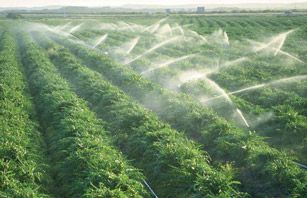
The sprinkler irrigation system is a modern irrigation method in which water is applied to crops in the form of artificial rainfall. Water is conveyed through a network of pipes and sprayed into the air through sprinkler heads. The water breaks into fine droplets and falls uniformly on the soil surface.
This method ensures controlled and uniform water distribution and is suitable for most types of crops and soil conditions.
What is a Sprinkler Irrigation System?
Sprinkler irrigation is a pressurized irrigation technique where water is pumped through main, sub-main, and lateral pipes and discharged through nozzles to simulate natural rainfall.
The system mainly consists of:
- Water source (well, river, reservoir)
- Pump unit
- Main and sub-main pipelines
- Lateral pipes
- Riser pipes
- Sprinkler heads
- Control valves and pressure regulators
Operating pressure generally ranges from 1–4 kg/cm2, depending on the system design.
When to Use Sprinkler Irrigation?
1. Suitable Land Slopes
Sprinkler irrigation works efficiently on both level and uneven land. It is particularly useful where surface irrigation methods are not feasible.
2. Suitable Crops
This system is suitable for cereals, vegetables, oilseeds, lawns, orchards, and plantation crops. Fine nozzles should be used for delicate crops to prevent leaf damage.
3. Suitable Soils
Sprinkler irrigation can be applied to sandy, loamy, and clayey soils. Soils with high infiltration rates, such as sandy soil, are particularly suitable.
The application rate must always be lower than the soil infiltration rate to avoid runoff and ponding.
4. Suitable Water Quality
Clean, filtered water is essential to prevent nozzle clogging and maintain uniform distribution.
Types of Sprinkler Irrigation System
1. Rotating Head Sprinkler System
- Water is discharged through rotating nozzles.
- Rotation angle ranges from 90° to 360°.
- Operating pressure: 2–4 kg/cm2.
- Application rate: 4–20 mm/hr.
2. Perforated Pipe Sprinkler System
- Pipes contain small holes along their length.
- Operates at low pressure (approximately 1 kg/cm2).
- Application rate: 1.35–5 cm/hr.
Advantages of Sprinkler Irrigation
- Uniform water distribution
- Suitable for uneven terrain
- Reduces soil erosion
- Saves labor compared to traditional surface irrigation
- Efficient water use
- Can be automated
Disadvantages of Sprinkler Irrigation
- High initial installation cost
- Nozzle clogging risk
- Wind may disturb uniformity
- Evaporation losses in hot climates
Frequently Asked Questions (FAQs)
1. What is sprinkler irrigation?
Sprinkler irrigation is a pressurized irrigation method where water is sprayed over crops in the form of artificial rainfall.
2. What pressure is required for sprinkler irrigation?
Generally, sprinkler irrigation operates between 1 and 4 kg/cm² depending on the system type and nozzle size.
3. Which soil is best for sprinkler irrigation?
Sandy and loamy soils are most suitable because they allow proper infiltration of water.
4. What are the main types of sprinkler irrigation systems?
The two major types are rotating head sprinkler systems and perforated pipe sprinkler systems.
5. What are the advantages of sprinkler irrigation?
It provides uniform distribution, works on uneven land, reduces erosion, and can be automated.
Conclusion
The sprinkler irrigation system is an efficient and flexible irrigation method suitable for a wide range of crops and land conditions. With proper pressure control, filtration, and maintenance, it ensures uniform water distribution and improved agricultural productivity.