

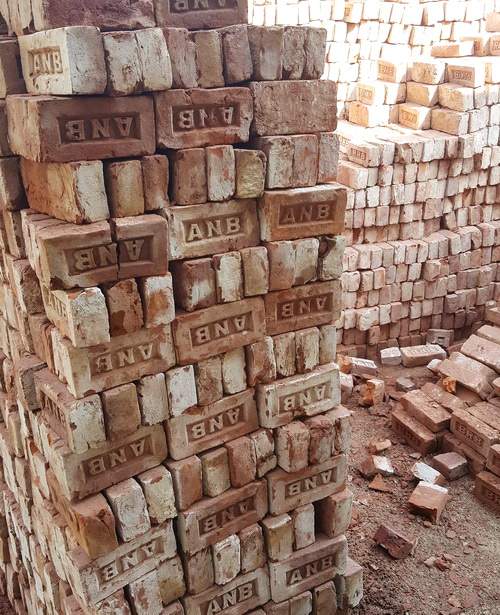
Bricks are rectangular masonry units of standard size, mainly made from clay. They are widely used in building construction works. Bricks are commonly used as a substitute for stone where stone is not easily available. Due to their durability, ease of handling, and cost-effectiveness, bricks are one of the most popular building materials.
Types of Bricks
Bricks can be classified into different types based on the following factors:
- Quality
- Building process
- Manufacturing method
- Raw material
- Using location
- Weather-resisting capability
- Purpose of use
- Shape
- Region
Classification of Bricks Based on Quality
Based on quality, bricks are classified into the following categories:
- First Class Bricks: These bricks are of standard size and uniform shape. They are well burnt and have a uniform red or yellow color. Water absorption is less than 10%. The average crushing strength is about 280 kg/cm2, with a minimum of 245 kg/cm2. They are free from efflorescence, pebbles, gravel, and organic matter. When struck together, they produce a clear metallic sound. First class bricks are generally used:
- In buildings with long design life (about 100 years)
- In structures exposed to aggressive or corrosive environments
- As coarse aggregate in concrete
- Second Class Bricks: These bricks are well burnt and of regular shape, though slight irregularities are permitted. Water absorption varies between 10% and 15%. The average crushing strength is about 175 kg/cm2, with a minimum of 154 kg/cm2. Efflorescence is negligible. They are commonly used in one-storied buildings and temporary structures with a design life of up to 15 years.
- Third Class Bricks: These bricks are under-burnt and irregular in shape. They are light red in color and have high water absorption (15%–20%). The average crushing strength is about 140 kg/cm2, with a minimum of 105 kg/cm2. They show considerable efflorescence and produce a dull sound when struck. These bricks are used only for temporary and non-load-bearing works.
Classification of Bricks Based on Building Process
Based on the building process, bricks are classified as follows:
- Unburnt Bricks: These bricks are sun-dried and not fired in kilns. They have low strength and poor durability. They are used as surki in lime terracing and as soling material under RCC foundations. They should not be exposed to rainwater.
- Burnt Bricks: These bricks are fired in kilns. First class, second class, and third class bricks belong to this category.
- Over-burnt (Jhama) Bricks: These bricks are fired at very high temperatures and become vitrified. Their shape is distorted, but strength is high. They are used in lime concrete and as coarse aggregate in concrete for foundations and non-water-retaining members. {adselite}
Classification of Bricks Based on Manufacturing Method
Based on manufacturing method, bricks are classified as follows:
- Extruded Bricks: These bricks are produced by forcing clay through a steel die and cutting it into units. They have uniform shape and usually contain perforations. They are economical and widely used.
- Molded Bricks: These bricks are shaped manually in molds. Standard sizes are readily available, while custom shapes require longer production time.
- Dry-Pressed Bricks: These bricks are made by compressing clay into molds. They usually have frogs on the bedding surfaces.
Classification of Bricks Based on Raw Materials
Based on raw materials used, bricks are classified as follows:
- Burnt Clay Bricks: These are the most commonly used bricks. They require plastering when used in construction.
- Fly Ash Bricks: These bricks are made from fly ash and clay. They have low water absorption, smooth finish, and do not require plastering.
- Concrete Bricks: These bricks are made from concrete. They are mainly used above damp proof course and for facades, fences, and partitions. They are also known as mortar bricks.
- Sand-Lime Bricks: These bricks are made from sand, lime, and fly ash. They have uniform shape, smooth finish, and high strength. They are used as load-bearing members.
- Fire Bricks: Also known as refractory bricks. They can withstand very high temperatures and are used in furnaces and chimneys.
Classification of Bricks Based on Using Location
Based on location of use, bricks are classified as follows:
- Facing Bricks: These bricks are used on the exterior walls of buildings. They are durable, weather-resistant, and aesthetically pleasing.
- Backing Bricks: These bricks are used behind facing bricks to provide structural support.
Classification of Bricks Based on Weather-Resisting Capability
- Severe Weather Grade: Suitable for freeze-thaw conditions
- Moderate Weather Grade: Suitable for tropical climates
- No Weather Grade: Used only for interior works
Classification of Bricks Based on Purpose of Use
Based on usage, bricks are classified as follows:
- Common Bricks: Used for interior walls and non-load-bearing works.
- Engineering Bricks: High-strength, low-absorption bricks used for sewers, manholes, retaining walls, and damp-proof courses.
Classification of Bricks Based on Shape
Based on shape, bricks are classified as follows:
- Bullnose bricks
- Air bricks
- Channel bricks
- Coping bricks
- Cow-nose bricks
- Capping bricks
- Brick veneers
- Curved sector bricks
- Hollow bricks
- Paving bricks
- Perforated bricks
- Purpose-made bricks
Classification of Bricks Based on Region
- Cream City bricks (USA)
- London stock bricks (UK)
- Dutch bricks (Netherlands)
- Nanak Shahi bricks (India)
- Roman bricks
- Staffordshire blue bricks (England)
Brick Related Articles
- What is brick?
- Types of Bricks
- Composition of Bricks
- Characteristics of Good Bricks.
- Uses of brick.
- Compressive Strength of Brick
- Density of Brick
- Thermal Conductivity of Brick
- Advantages and Disadvantages of Hoffmann kiln.
- What is Refractory or Fire Bricks? Types, Composition
- Properties of Good Refractory Bricks
- Uses of Refractory Bricks
- Lime Pitting