

Brick bonds are the patterns in which bricks are arranged in brick masonry for walls or paving. Proper bonding ensures structural stability, load distribution, and aesthetic appearance. Different types of brick bonds are used depending on whether the brickwork is load-bearing, non-load-bearing, or decorative.
What is Brick Bond?
In brick masonry, brick bond refers to the arrangement of bricks in specific patterns to achieve structural integrity and proper load transfer. Bricks have six faces: stretcher, header, bed, frog, and two sides. Various combinations of these faces form different bonding patterns.
Brick masonry walls are constructed in layers known as courses, bonded together using mortar.
Important terminology:
- Bed: Horizontal mortar layer on which bricks are laid.
- Perpend: Vertical mortar joint between adjacent bricks.
- Course: A horizontal layer of bricks.
- Quoin: External corner of a masonry wall.
- Queen Closer: A brick cut longitudinally into two equal halves.
- Three-quarter Bat: A brick cut to three-fourths of its length.
Necessity of Brick Bonds
Brick walls must safely carry vertical loads and transfer them to beams or foundations. If bricks were laid directly above one another without staggering, continuous vertical joints would form. This would:
- Reduce structural strength
- Increase risk of cracking
- Reduce resistance to lateral loads
Proper bonding creates interlocking between bricks. The staggered arrangement distributes vertical and lateral loads across a larger wall area, improving stability and durability.
Brick Bonds for Wall Masonry
Brick bonds used in wall masonry can be divided into two categories:
Main Types of Brick Bonds
- Flemish Bond
- English Bond
- Facing Bond
- Running (Stretcher) Bond
- Header Bond
- Stacked Bond
Flemish Bond
Each course consists of alternating stretcher and header bricks. A queen closer is placed near the quoin to maintain proper vertical alignment.
Single Flemish Bond
Front face uses Flemish bond, while the backing is constructed using a stronger bond such as English bond.
Double Flemish Bond
Both faces of the wall are constructed in Flemish bond pattern.
Monk Bond
Two stretchers are placed between every header. The header is centered over the joint between stretchers below.
Flemish Garden Wall Bond (Sussex Bond)
Three stretchers are placed between each header. Mainly used for aesthetic purposes.
English Bond
English bond consists of alternating courses of headers and stretchers. This eliminates continuous vertical joints and provides higher structural strength. It is commonly used in load-bearing walls.
English Cross Bond
Similar to English bond but with offset arrangement in alternate stretcher courses.
Double English Cross Bond
Two stretcher courses followed by two header courses. Three-quarter bats are used instead of queen closers.
English Garden Wall Bond
Three stretcher courses between header courses. Used mainly for moderate strength and aesthetic walls.
Scottish Bond
Five stretcher courses between each header course.
American Bond
Six to nine stretcher courses between header courses.
Dutch Bond
Similar to English bond but uses a three-quarter bat in alternate header courses to create lap.
Facing Bond
Header courses are inserted at intervals among stretcher courses. Used where front and backing brick thickness differ.
Header Bond
Only header bricks are used. Suitable for one-brick thick walls.
Running or Stretcher Bond
All bricks are laid showing stretcher faces. Commonly used for partition walls and cavity walls.
Raking Stretcher Bond
Variation of stretcher bond arranged diagonally.
Stacked Bond
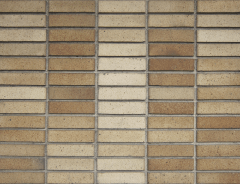
Bricks are vertically aligned without staggering. Provides very low structural strength and used only for decorative purposes.
Brick Bonds for Paving
Brick paving bonds are selected mainly for aesthetic appearance and surface stability. Since the paving is supported by sub-base layers, load transfer requirements differ from wall masonry.
Running Bond
Same as stretcher bond used in walls.
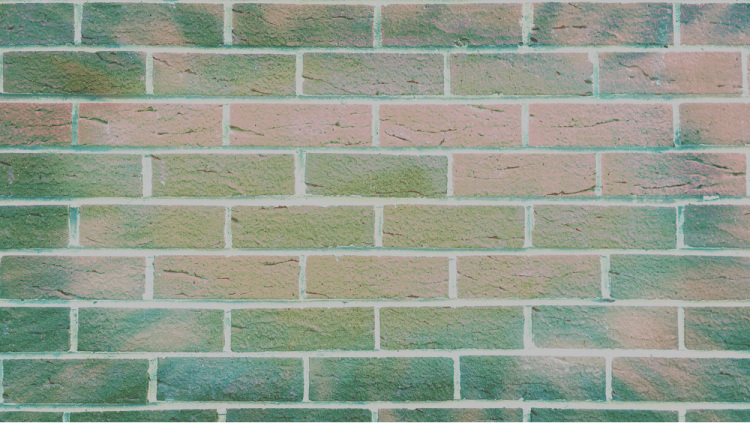
Herringbone
Bricks are laid at 45° or 90° angles creating a zigzag pattern. Provides high interlocking strength.
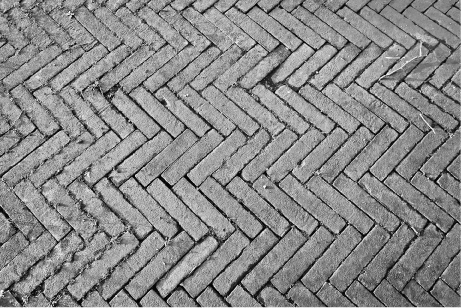
Basketweave
Pairs of bricks are arranged alternately in horizontal and vertical patterns.
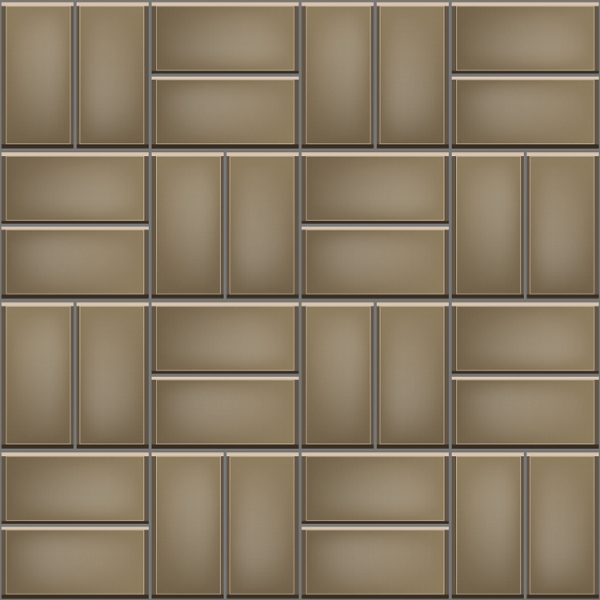
Pinwheel
A half brick is placed at the center with surrounding bricks forming a square pattern.
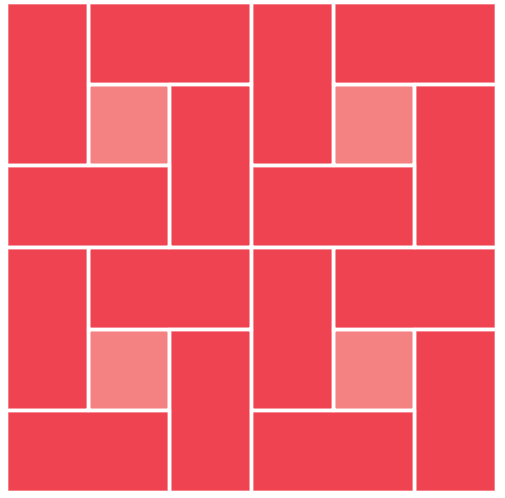
Stacked
Bricks are aligned vertically without staggering.
Conclusion
Brick bonds play a vital role in ensuring structural stability, durability, and aesthetic value of masonry construction. For load-bearing walls, stronger bonds such as English bond are preferable. For decorative purposes, Flemish or stacked bonds may be selected. In paving applications, herringbone patterns provide superior interlocking performance.